13
d'Abril
de
2016 - 04:19
Act.
13
d'Abril
de
2016 - 16:19
"The different institutional, business, research and municipal spheres have to cooperate to achieve the value of attraction." so says Raül Romeva, Catalan minister of foreign affairs, at the end of the first Business Diplomacy Workshop organised by Diplocat and Pimec. "We want to be recognised in the world for the way we do things. We have to reach out to the world through 21st century diplomacy, which is based on business, the economy and politics. Through their activities, businesses explain who we are and what we do. They act as ambassadors of a cultural, social and economic reality," insists Romeva, in order to consolidate the value of Made in Catalonia.
Although this is not the main aim of companies working internationally, the truth is that everything they do abroad can have repercussions on the country. Catalonia, through the activities of Diplocat, wants to take advantage of Barcelona's reputation and the sustained increase in exports to create a prestigious brand that continues to contribute to more and better foreign investment. It has been designated as the most attractive region in the south of Europe for investment in 2016, according to the Financial Times but this has to be only the beginning.
"We do a lot of diplomacy as a country, but there is also anonymous work done by our companies working abroad, projecting the image of the country," says Antoni Cañete, secretary general of Pimec. "The country's brand provides a position that helps products enter new markets more easily. Therefore companies have a task that goes beyond just selling their products," he adds.
The Catalan guarantee
In the past three years, Pimec and Diplocat have together provided recognition for companies that with their work abroad contribute to the positioning of the Catalonia brand. One of these is Aranow, which makes packaging machinery. Its director general, Jordi Cuixart, says that "we wanted the company to be a normal, Catalan firm, but then using that for leverage."
As a manufacturer, the Aranow name was not well-known. Therefore, they decided to draw on the reputation of manufacturers of packaging machinery in Catalonia. "Made in Catalonia helped us. It was not an act of patriotism, it was the excuse to make people interested in us," says Cuixart. With 95% of their sales outside Spain, a good proportion beyond the EU's borders, taking advantage of the traditional prestige of Catalan manufacturers in the sector has been a successful strategy for Aranow.
Another company that had its diplomatic role recognised is Scytl, a world leader in software for electronic voting. Its executive director, Pere Vallès, explains that 99% of its turnover comes from outside Catalonia. "Sometimes we are asked why we do not relocate to the United States. But with issues like voting, being in Catalonia is a benefit."
Vallès is clear that going out into the world as a Catalan company based in Barcelona provides added value for Scytl. "Catalonia has a good image around the world. That helps us to manage critical elections in complicated countries around the planet." For Vallès, "being a technology company based in Barcelona is now seen as normal. It is reference point for success and international investors see investing in new technologies in Catalonia as normal."
The last company to receive special recognition was the brewery Moritz. Santi Manzano, director general of the company says that a good part of the success in relaunching the company was down to the values rooted in the country. "We are excited to work in a company with similar values to ours." For Manzano, "it is a success that people associate us with both Barcelona and Catalonia; and we did this with little money but a lot of creativity." In the same way that they went to Brussels to defend labelling in Catalan, the head of Moritz insists that "we have a lot of belief in the country and its culture, and we will continue to defend them everywhere."
Products well made
Out of the idea of associating the Catalonia brand to high quality products, came the Ben Fet project. Its president, Esteve Pintó, points out that "it is not a political idea, but rather a social one. The most has to made of internal consumption, to guarantee a return to the consumer, and contribute to the international profiles of companies." These are the project's three main aims.
"The world has to know that we do good work in Catalonia. That is why we need loyal and committed consumers; diverse, high-quality producers; and distribution that is involved and prescriptive," says Pintó. The head of the Ben Fet project laments that "Catalonia still lacks a world vision, and a Catalan brand is required that accompanies companies."
The German example
In Germany, for a decade work has been going on developing the country's brand through Germany Land of Ideas, a platform headed by Ariane Derks. Driven in equal parts by industry and government, Derks highlights the fact that "we are independent and we work as a company, with objectives and results."
Created in 2005, the football World Cup hosted by the country the following year was the perfect excuse to begin working on Germany's positive points. "We used the passion for football to achieve more media attention and more impact," Derks says.
When it comes to working on a country's brand, Derks recommends "considering the interests and ideas of different stakeholders." The head points out that "nation branding is always very emotional," and she says that "we want to offer an image of a contemporary Germany both within and outside the country, with all its strengths as a place to live and do business."
Politics, science, economy and culture are four basic pillar for Germany Land of Ideas, in which Derks insists on the need to "join public and private efforts." The head of the project points out that "we have to reflect everyone's ideas, to convince ourselves that we are good before going out and explaining it to others. Germans still do not have a good perception of themselves because of their history."
To do so, they use all the communication techniques at their disposal, but "always being honest. There is no problem in explaining your strengths and weaknesses, which you also have," Derks points out. Without a specific PR budget, the head of the project says that "we appear in the media thanks to the stories we can tell, without inventing anything." They even play with stereotypes. Everything can be used to build a brand that is strong enough to overcome the crisis of reputation caused by the Volkswagen scandal.
Although this is not the main aim of companies working internationally, the truth is that everything they do abroad can have repercussions on the country. Catalonia, through the activities of Diplocat, wants to take advantage of Barcelona's reputation and the sustained increase in exports to create a prestigious brand that continues to contribute to more and better foreign investment. It has been designated as the most attractive region in the south of Europe for investment in 2016, according to the Financial Times but this has to be only the beginning.
"We do a lot of diplomacy as a country, but there is also anonymous work done by our companies working abroad, projecting the image of the country," says Antoni Cañete, secretary general of Pimec. "The country's brand provides a position that helps products enter new markets more easily. Therefore companies have a task that goes beyond just selling their products," he adds.
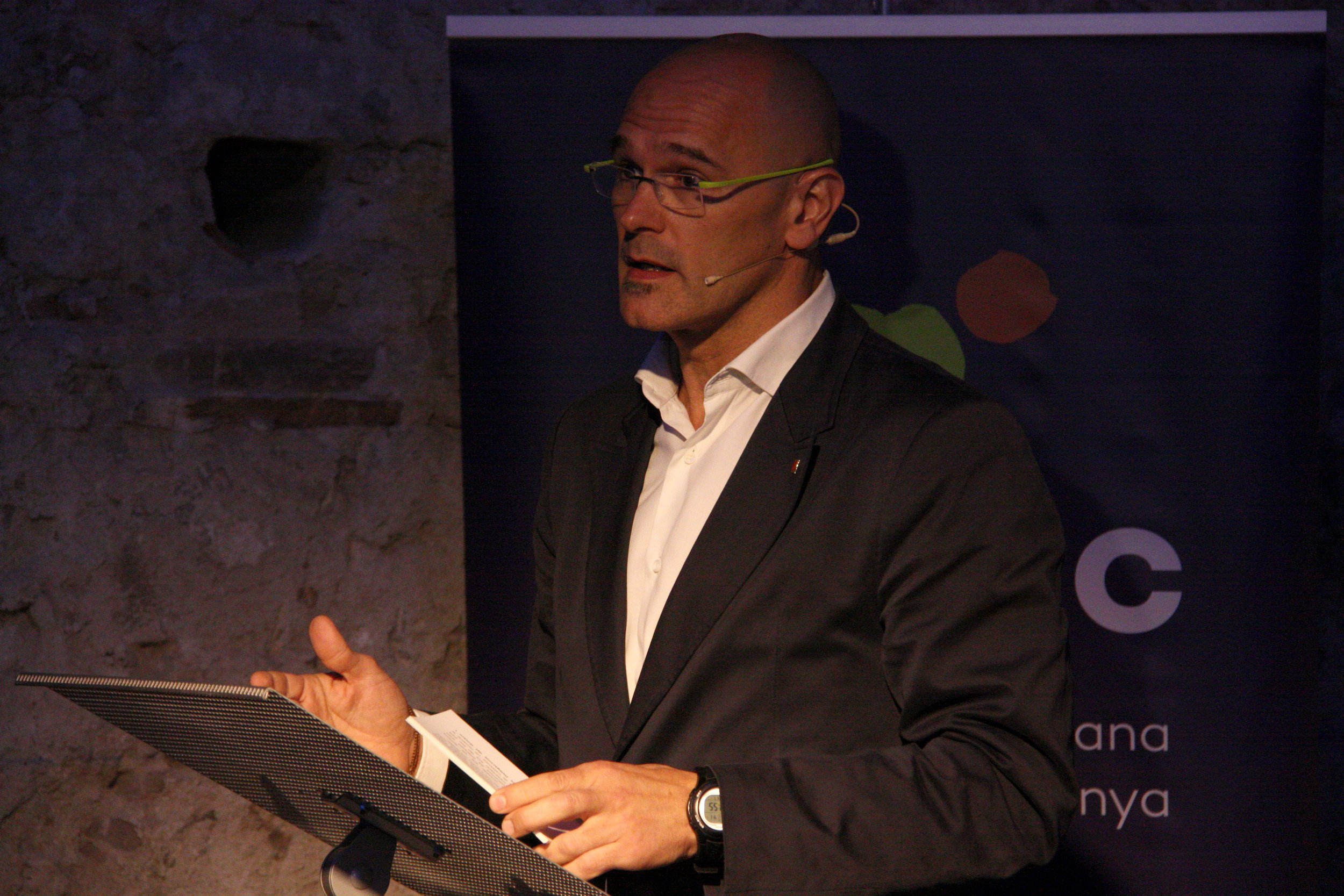 |
| Minister Raül Romeva during his speech. M. Ferragut (ACN) |
The Catalan guarantee
In the past three years, Pimec and Diplocat have together provided recognition for companies that with their work abroad contribute to the positioning of the Catalonia brand. One of these is Aranow, which makes packaging machinery. Its director general, Jordi Cuixart, says that "we wanted the company to be a normal, Catalan firm, but then using that for leverage."
As a manufacturer, the Aranow name was not well-known. Therefore, they decided to draw on the reputation of manufacturers of packaging machinery in Catalonia. "Made in Catalonia helped us. It was not an act of patriotism, it was the excuse to make people interested in us," says Cuixart. With 95% of their sales outside Spain, a good proportion beyond the EU's borders, taking advantage of the traditional prestige of Catalan manufacturers in the sector has been a successful strategy for Aranow.
Another company that had its diplomatic role recognised is Scytl, a world leader in software for electronic voting. Its executive director, Pere Vallès, explains that 99% of its turnover comes from outside Catalonia. "Sometimes we are asked why we do not relocate to the United States. But with issues like voting, being in Catalonia is a benefit."
Vallès is clear that going out into the world as a Catalan company based in Barcelona provides added value for Scytl. "Catalonia has a good image around the world. That helps us to manage critical elections in complicated countries around the planet." For Vallès, "being a technology company based in Barcelona is now seen as normal. It is reference point for success and international investors see investing in new technologies in Catalonia as normal."
The last company to receive special recognition was the brewery Moritz. Santi Manzano, director general of the company says that a good part of the success in relaunching the company was down to the values rooted in the country. "We are excited to work in a company with similar values to ours." For Manzano, "it is a success that people associate us with both Barcelona and Catalonia; and we did this with little money but a lot of creativity." In the same way that they went to Brussels to defend labelling in Catalan, the head of Moritz insists that "we have a lot of belief in the country and its culture, and we will continue to defend them everywhere."
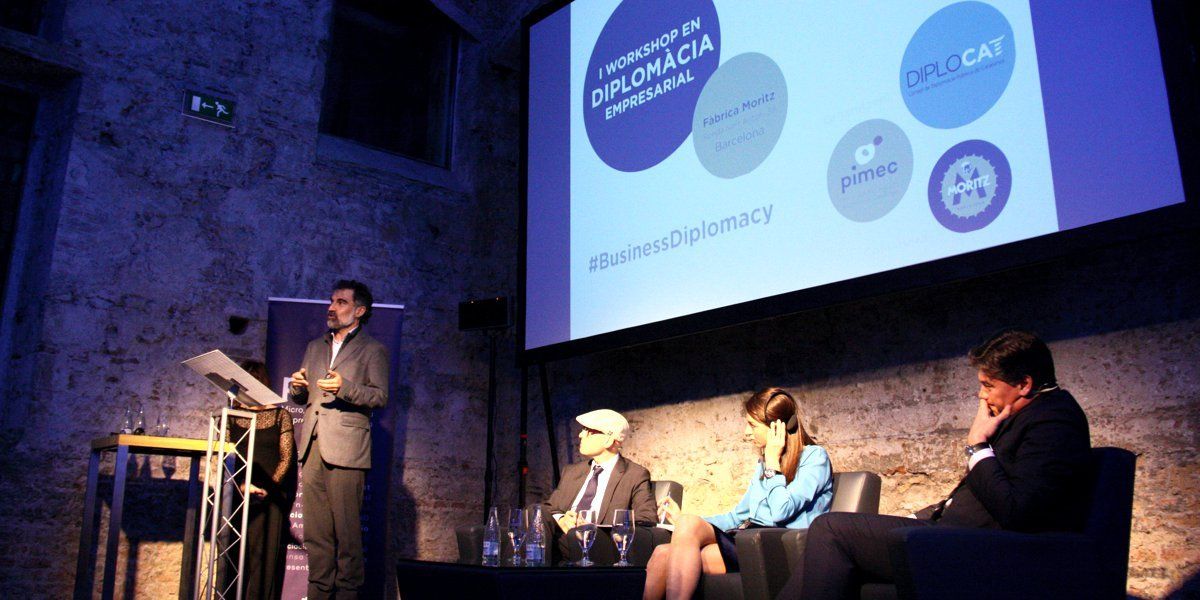 |
| Jordi Cuixart explains how Made in Catalonia has helped Aranow. M. Ferragut (ACN) |
Products well made
Out of the idea of associating the Catalonia brand to high quality products, came the Ben Fet project. Its president, Esteve Pintó, points out that "it is not a political idea, but rather a social one. The most has to made of internal consumption, to guarantee a return to the consumer, and contribute to the international profiles of companies." These are the project's three main aims.
"The world has to know that we do good work in Catalonia. That is why we need loyal and committed consumers; diverse, high-quality producers; and distribution that is involved and prescriptive," says Pintó. The head of the Ben Fet project laments that "Catalonia still lacks a world vision, and a Catalan brand is required that accompanies companies."
The German example
In Germany, for a decade work has been going on developing the country's brand through Germany Land of Ideas, a platform headed by Ariane Derks. Driven in equal parts by industry and government, Derks highlights the fact that "we are independent and we work as a company, with objectives and results."
Created in 2005, the football World Cup hosted by the country the following year was the perfect excuse to begin working on Germany's positive points. "We used the passion for football to achieve more media attention and more impact," Derks says.
When it comes to working on a country's brand, Derks recommends "considering the interests and ideas of different stakeholders." The head points out that "nation branding is always very emotional," and she says that "we want to offer an image of a contemporary Germany both within and outside the country, with all its strengths as a place to live and do business."
Politics, science, economy and culture are four basic pillar for Germany Land of Ideas, in which Derks insists on the need to "join public and private efforts." The head of the project points out that "we have to reflect everyone's ideas, to convince ourselves that we are good before going out and explaining it to others. Germans still do not have a good perception of themselves because of their history."
To do so, they use all the communication techniques at their disposal, but "always being honest. There is no problem in explaining your strengths and weaknesses, which you also have," Derks points out. Without a specific PR budget, the head of the project says that "we appear in the media thanks to the stories we can tell, without inventing anything." They even play with stereotypes. Everything can be used to build a brand that is strong enough to overcome the crisis of reputation caused by the Volkswagen scandal.