13
de Juny
de
2016 - 05:56
It is hard to hear any conversation about entrepreneurship and startups without the concept of business angels coming up. It refers to a specific profile of investor that José Herrera, president of the Asociación Española de Redes de Business Angels (Aeban), strongly argues is crucial in attracting capital at key moments for the company's survival. In fact, Aeban recently presented a study on the profile of this type of investor, focusing on companies that create high value jobs.
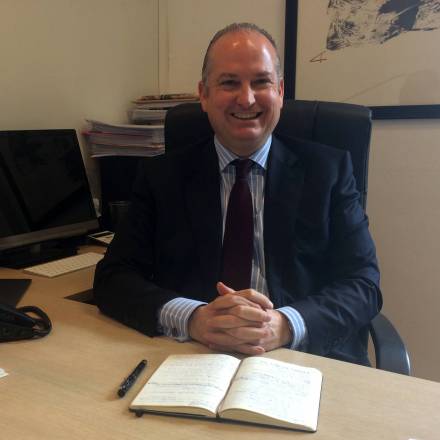
Herrera, a law graduate and with a masters in economics from the Universitat de Barcelona, receives VIA Empresa at his headquarters in HF Legal, the law firm he is a partner in. It is work he combines with being a member of IESE's business angel network.
Do you need to have been a successful entrepreneur to be a business angel?
You don't need to have had a successful career, nor be retired, nor have great wealth. One thing our study has shown is that half of business angels are under 44. That tells us that a substantial part of the management accounts of companies devote part of their money to investment. That is very laudable because people who have not accumulated capital as surplus still take risks and invest.
What should be the role of an investor in a startup?
Each project and each entrepreneur is a thing in itself. There are those that need more involvement than others. And there are a lot of different types of investors! But we have to imagine that one can manage a diverse portfolio of 10 investments. You need to decide whether to put in only money, or also be a board member (where the recommendations of good management suggest should not go above four or five members); and it is even more difficult to work in all of them; as a maximum you can perhaps take on one or two.
What does a business angel bring over that of a conventional investor?
The business angel provides the entrepreneur with a supplement to their capacity of execution and the capital they need. Yet, the business angel is what we call smart capital, because apart from money they provide very valuable advice to people just starting out. When a project has grown, then it can pay outside consultants, but at the beginning this help is very important. Business angels normally invest in sectors they know and, therefore, they can offer an extra in the form of networking with suppliers, clients or other investors.
How can you find the most appropriate business angel for your project?
I recommend entrepreneurs to use a business angel network. This depends on presenting good projects to a group of potential investors. And to do that, the projects have to be filtered by evaluating them, analysing them and seeing if it makes sense to present them. The filtering committee is made up of the people who manage the network, but also of very expert angels. So, getting through such a process means that very probably you will raise funds from the day you present the project. That is the best way of approaching a group of business angels.
What if you do not go through such a network?
Business angels have a super inflation of projects. If the project goes ahead without being well filtered, and people talk about it, you can burn it out. Thus, if one day you present yourself to a network perhaps they will already have heard about it, ruled it out and do not want to waste their time. We think that the largest networks analyse 20 projects a day and the percentage of investment is 1%. Therefore, to get left behind at the beginning is a worrying thing.
Is the local factor becoming lost in investments by business angels?
That is a fundamental element. Networks have always been separated geographically because it is thought that the business angel wants to provide this extra element of consultancy and so cannot be too far way from the entrepreneur. However, this has evolved a lot and in the Spanish sphere a lot of investment is carried out without this territorial limit. Many also invest abroad. New technology makes it possible to carry out these distant investments. This means that networks have begun to appear that are split up into sectors. For example, the Col·legi de Metges puts on forums for business angels in which they present projects related to the health industry. Obviously it is the best forum for them. And there are many others like that.
Are investments increasingly divided up?
There has been a significant evolution here in the past few years. The statistics show that 65% of projects fail and close, 25% survive and only 10% are successful. So, the most important thing is to have a diversified investment portfolio. That is why business angels are almost never alone and opt for joint investment. That way they lower the stakes and get the chance to get to as many as 10 investments.
What are they looking for in a project?
Obviously they study the profitability. If the project does not provide substantial capital multipliers they do not look at it. In second place they look to see if they know the sector to discern whether the proposal makes sense or not. And, finally, what they look at most is the entrepreneur. In business schools the debate is still not resolved on what is most important: entrepreneur/team or business model. What is becoming clear is that the entrepreneur is more important than the team, as it is easier to change it without causing a problem. In any case, the effort required at the beginning of a startup is very important so that the leader is key in the survival of the project in its first two years of life.
There are all sorts of opinions about whether the entrepreneur or the business model is the most important thing.
It is an unresolved debate. However, when we think about an entrepreneur or a business model we think in terms of the statistics. But the world is very dynamic and is changing increasingly quickly. Therefore, a startup's initial business model is normally a model that is modified and adapts over time. Before, you were not expected to get to the market until the business model was finished. However, the preference now is to do so with a service layer and to add more over time. In the end, the reality shows that the initial service layer is not normally the formula for success, those that come later are.
What is going on with investments that survive without multiplying the return for investors?
When we say that 65% close down, it does not mean that they are not viable. It does not mean that the high value proposal disappears. Very often it is bought out by a bigger company, becomes integrated into its production channel and becomes diluted because it was not viable as a company. The 25% that survive reach a point of balance and become living companies. What they do not have is the chance to revert to more investment. If it cannot be shown that it is a high-growth company it will have problems attracting investment in subsequent rounds. In the end, what we want to show with all of these figures is that people with wealth to invest assign it to these companies as a complement to their fixed income, variable income or property. That there is a part that goes to startups, which is an asset class, a type of asset in which to place money. For this to happen, the market has to be very established and there should be no fear about getting into it.
Are we not aware enough of the capacity of these investments to generate high value jobs?
We think that 11% of employment in the EU is created by startups with fewer than 50 employees. And that represents 33% of the EU's high value labour market. Therefore, it is vital to be able to prevent these companies from dying off.
What is your evaluation of different large companies now opting for corporate venturing?
It is an important new player. Large companies that realise the need for a powerful innovation department, but which have problems setting one up within the company. The dynamics of a large company do not always generate the dynamics needed for innovation. Thus, they create incubators with projects that are suitable for their sector, that implicate the company management directly in selection, etc. That way, if they are successful, they can be integrated or left as an independent company acting as another partner. It is another example of how investment is moving towards a fully sectorial model.
However, there is not the same ease of access to capital in all areas...
It is true that there is an equity gap. You begin with the three Fs: family, friends and fools. But until you can get traditional venture capital, which requires significant returns, there is an intermediary period when a lot of projects die off. They still do not have income nor have they shown that they have found the successful business model and they burn through their money. This trial by fire is what business angels cover, they are the ones who prevent a lot of companies from dying off.
Is it also difficult to find funding at the later stages?
Once they manage to survive and it is time to attract venture capital, it often becomes difficult because the structure of our European capital markets is very partitioned. It is hard to do big things and raise a lot of money, while in the United States it is easier. That is why many startups go over there once they have shown that they are good. The European Commission is aware of this and wants to avoid it, and in the new project to unify capital markets in 2017 business angels and startups will be a priority.
Does the current regulation fit the needs of the market?
There are two types of equally important regulation: the fiscal, to incentivise this investment, which like anything could be better, especially compared with countries around us. It is a type of very high risk investment that has a very relevant component of creating high value jobs. And in the other there is a regulatory component of trying to foster the dynamics of these groups by facilitating access to traditional investment, the training of business angels, etc. There is a long way to go and we have to do so by situating ourselves ahead of other continents.
Nevertheless, there are tax incentives for investment in startups...
Yes, but only 27% of investors use these tax advantages. The need for a portfolio of around 10 investments means that many people prefer to do everything through a single private limited company. In not investing as a private individual they lose these tax breaks. Nevertheless, it needs to be closely looked at to see how this 27% can be increased. It will not be the main element when it comes to investing in new companies, but every little helps.
Herrera, a law graduate and with a masters in economics from the Universitat de Barcelona, receives VIA Empresa at his headquarters in HF Legal, the law firm he is a partner in. It is work he combines with being a member of IESE's business angel network.
Do you need to have been a successful entrepreneur to be a business angel?
You don't need to have had a successful career, nor be retired, nor have great wealth. One thing our study has shown is that half of business angels are under 44. That tells us that a substantial part of the management accounts of companies devote part of their money to investment. That is very laudable because people who have not accumulated capital as surplus still take risks and invest.
What should be the role of an investor in a startup?
Each project and each entrepreneur is a thing in itself. There are those that need more involvement than others. And there are a lot of different types of investors! But we have to imagine that one can manage a diverse portfolio of 10 investments. You need to decide whether to put in only money, or also be a board member (where the recommendations of good management suggest should not go above four or five members); and it is even more difficult to work in all of them; as a maximum you can perhaps take on one or two.
What does a business angel bring over that of a conventional investor?
The business angel provides the entrepreneur with a supplement to their capacity of execution and the capital they need. Yet, the business angel is what we call smart capital, because apart from money they provide very valuable advice to people just starting out. When a project has grown, then it can pay outside consultants, but at the beginning this help is very important. Business angels normally invest in sectors they know and, therefore, they can offer an extra in the form of networking with suppliers, clients or other investors.
How can you find the most appropriate business angel for your project?
I recommend entrepreneurs to use a business angel network. This depends on presenting good projects to a group of potential investors. And to do that, the projects have to be filtered by evaluating them, analysing them and seeing if it makes sense to present them. The filtering committee is made up of the people who manage the network, but also of very expert angels. So, getting through such a process means that very probably you will raise funds from the day you present the project. That is the best way of approaching a group of business angels.
What if you do not go through such a network?
Business angels have a super inflation of projects. If the project goes ahead without being well filtered, and people talk about it, you can burn it out. Thus, if one day you present yourself to a network perhaps they will already have heard about it, ruled it out and do not want to waste their time. We think that the largest networks analyse 20 projects a day and the percentage of investment is 1%. Therefore, to get left behind at the beginning is a worrying thing.
Is the local factor becoming lost in investments by business angels?
That is a fundamental element. Networks have always been separated geographically because it is thought that the business angel wants to provide this extra element of consultancy and so cannot be too far way from the entrepreneur. However, this has evolved a lot and in the Spanish sphere a lot of investment is carried out without this territorial limit. Many also invest abroad. New technology makes it possible to carry out these distant investments. This means that networks have begun to appear that are split up into sectors. For example, the Col·legi de Metges puts on forums for business angels in which they present projects related to the health industry. Obviously it is the best forum for them. And there are many others like that.
Are investments increasingly divided up?
There has been a significant evolution here in the past few years. The statistics show that 65% of projects fail and close, 25% survive and only 10% are successful. So, the most important thing is to have a diversified investment portfolio. That is why business angels are almost never alone and opt for joint investment. That way they lower the stakes and get the chance to get to as many as 10 investments.
What are they looking for in a project?
Obviously they study the profitability. If the project does not provide substantial capital multipliers they do not look at it. In second place they look to see if they know the sector to discern whether the proposal makes sense or not. And, finally, what they look at most is the entrepreneur. In business schools the debate is still not resolved on what is most important: entrepreneur/team or business model. What is becoming clear is that the entrepreneur is more important than the team, as it is easier to change it without causing a problem. In any case, the effort required at the beginning of a startup is very important so that the leader is key in the survival of the project in its first two years of life.
There are all sorts of opinions about whether the entrepreneur or the business model is the most important thing.
It is an unresolved debate. However, when we think about an entrepreneur or a business model we think in terms of the statistics. But the world is very dynamic and is changing increasingly quickly. Therefore, a startup's initial business model is normally a model that is modified and adapts over time. Before, you were not expected to get to the market until the business model was finished. However, the preference now is to do so with a service layer and to add more over time. In the end, the reality shows that the initial service layer is not normally the formula for success, those that come later are.
What is going on with investments that survive without multiplying the return for investors?
When we say that 65% close down, it does not mean that they are not viable. It does not mean that the high value proposal disappears. Very often it is bought out by a bigger company, becomes integrated into its production channel and becomes diluted because it was not viable as a company. The 25% that survive reach a point of balance and become living companies. What they do not have is the chance to revert to more investment. If it cannot be shown that it is a high-growth company it will have problems attracting investment in subsequent rounds. In the end, what we want to show with all of these figures is that people with wealth to invest assign it to these companies as a complement to their fixed income, variable income or property. That there is a part that goes to startups, which is an asset class, a type of asset in which to place money. For this to happen, the market has to be very established and there should be no fear about getting into it.
Are we not aware enough of the capacity of these investments to generate high value jobs?
We think that 11% of employment in the EU is created by startups with fewer than 50 employees. And that represents 33% of the EU's high value labour market. Therefore, it is vital to be able to prevent these companies from dying off.
What is your evaluation of different large companies now opting for corporate venturing?
It is an important new player. Large companies that realise the need for a powerful innovation department, but which have problems setting one up within the company. The dynamics of a large company do not always generate the dynamics needed for innovation. Thus, they create incubators with projects that are suitable for their sector, that implicate the company management directly in selection, etc. That way, if they are successful, they can be integrated or left as an independent company acting as another partner. It is another example of how investment is moving towards a fully sectorial model.
However, there is not the same ease of access to capital in all areas...
It is true that there is an equity gap. You begin with the three Fs: family, friends and fools. But until you can get traditional venture capital, which requires significant returns, there is an intermediary period when a lot of projects die off. They still do not have income nor have they shown that they have found the successful business model and they burn through their money. This trial by fire is what business angels cover, they are the ones who prevent a lot of companies from dying off.
Is it also difficult to find funding at the later stages?
Once they manage to survive and it is time to attract venture capital, it often becomes difficult because the structure of our European capital markets is very partitioned. It is hard to do big things and raise a lot of money, while in the United States it is easier. That is why many startups go over there once they have shown that they are good. The European Commission is aware of this and wants to avoid it, and in the new project to unify capital markets in 2017 business angels and startups will be a priority.
Does the current regulation fit the needs of the market?
There are two types of equally important regulation: the fiscal, to incentivise this investment, which like anything could be better, especially compared with countries around us. It is a type of very high risk investment that has a very relevant component of creating high value jobs. And in the other there is a regulatory component of trying to foster the dynamics of these groups by facilitating access to traditional investment, the training of business angels, etc. There is a long way to go and we have to do so by situating ourselves ahead of other continents.
Nevertheless, there are tax incentives for investment in startups...
Yes, but only 27% of investors use these tax advantages. The need for a portfolio of around 10 investments means that many people prefer to do everything through a single private limited company. In not investing as a private individual they lose these tax breaks. Nevertheless, it needs to be closely looked at to see how this 27% can be increased. It will not be the main element when it comes to investing in new companies, but every little helps.