06
d'Abril
de
2017 - 03:43
Act.
07
d'Abril
de
2017 - 15:57
"In a factory there are people, machines and products. They are three elements that we have to virtualise in order to build the digital factory." The CEO of Datapixel, Toni Ventura, comments on the process of digitalising industry during one of the final sessions of the Advanced Factories fair, which had its last day in Barcelona on Thursday, focused on the customisation of products and services. The process of buying and consuming is unique to each client and there are already a lot of brands that offer personalisation to improve engagement and customer loyalty. "There is a lot of market pressure to offer products that are increasingly personalised," says Lorenzo Veronesi, Research Manager of the IDC Manufacturing Insights company. It is a challenge that is pushing companies to "look at creating experiences that allow clients to configure a large part of the product," he adds. Yet, is industry ready for customisation? Is the success of personalised Coca Cola tins a form of product customisation, packaging or the result of marketing?
Breaking new ground
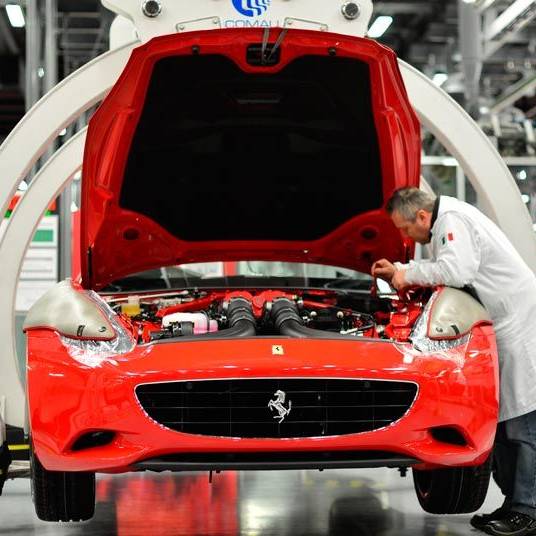
Digital factories with smart materials and machinery. This is behind the view of achieving production capable of adapting to the demands of each client. "The process is difficult because the client can change opinion at any time and up to the last moment of production there can be some detail of the product that he or she wants to change," points out Veronesi. Such is the case of Ferrari, the luxury car company that began making cars at the end of the 1940s, and that today has a programme of vehicle personalisation in which the client can choose everything from the colour of the seats to the dashboard.
Therefore, the promises you make as a company "have to be carried out". To do that will require quicker and more flexible machines. In short, he points out that "factories need more innovation and engineering than even the product. It is a product in itself, such as Tesla's gigafactory in Nevada," he says by way of example.
"We have to be aware that manufacturing is the centre of everything but that the greatest value is in what surrounds it: in the sales or the relationship with the customer," says Toni Ventura. In Datapixel's case, with clients from the automobile industry to whom it supplies inspection systems for the quality control of production, it offers "services that allow manufacturing what the client wants without defects."

Session on the customisation of products and services during the Advanced Factories fair. Ceded
In fact, avoiding errors is fundamental when the production is personalised. It is something they know very well in the textile sector, which is also joining industry 4.0. "Today's clients sit in front of the computer and you need algorithms that transform their data into useful measures so as to make the article," says Meike Tilebein, director of the Center for Management Research of the German Institute of Textile and Fiber Research. "If you want a flexible process, all the machines involved have to be able to communicate," she adds.
That means everything has to be digitalised and "to only produce when the product is fully personalised by the consumer, including a simulation of what it will be like." Yet, she warns, consumers need a simple process. "If it is too complicated, difficult or not attractive enough, personalisation does not work." In other words, the efficiency of the production chain is one of the challenges of mass customisation; the client will not wait a month to get a personalised jacket; they want it here and now.
Personalisation that generates creativity
Gastronomy has also joined product personalisation. It is what Natural Machines does through Foodini, the 3D food printer created in Barcelona. "We want to put a mini-production plant in every kitchen. We will not be able to produce on a mass scale, but we will be able to produce with a high level of personalisation," says the Project Manager of the Catalan startup, Joan Casellas.
Food, ingredients, alternatives... everything can be personalised. It is an interesting product in the sector of gastronomy and creative cuisine. In fact, it is in the sphere of high cuisine where Foodini is currently being used most. As Casellas points out, "the aim is to win over the consumer, for the client to spend his or her time learning to personalise the product and getting hooked on our technology."
Breaking new ground
Digital factories with smart materials and machinery. This is behind the view of achieving production capable of adapting to the demands of each client. "The process is difficult because the client can change opinion at any time and up to the last moment of production there can be some detail of the product that he or she wants to change," points out Veronesi. Such is the case of Ferrari, the luxury car company that began making cars at the end of the 1940s, and that today has a programme of vehicle personalisation in which the client can choose everything from the colour of the seats to the dashboard.
Therefore, the promises you make as a company "have to be carried out". To do that will require quicker and more flexible machines. In short, he points out that "factories need more innovation and engineering than even the product. It is a product in itself, such as Tesla's gigafactory in Nevada," he says by way of example.
"We have to be aware that manufacturing is the centre of everything but that the greatest value is in what surrounds it: in the sales or the relationship with the customer," says Toni Ventura. In Datapixel's case, with clients from the automobile industry to whom it supplies inspection systems for the quality control of production, it offers "services that allow manufacturing what the client wants without defects."
Session on the customisation of products and services during the Advanced Factories fair. Ceded
In fact, avoiding errors is fundamental when the production is personalised. It is something they know very well in the textile sector, which is also joining industry 4.0. "Today's clients sit in front of the computer and you need algorithms that transform their data into useful measures so as to make the article," says Meike Tilebein, director of the Center for Management Research of the German Institute of Textile and Fiber Research. "If you want a flexible process, all the machines involved have to be able to communicate," she adds.
That means everything has to be digitalised and "to only produce when the product is fully personalised by the consumer, including a simulation of what it will be like." Yet, she warns, consumers need a simple process. "If it is too complicated, difficult or not attractive enough, personalisation does not work." In other words, the efficiency of the production chain is one of the challenges of mass customisation; the client will not wait a month to get a personalised jacket; they want it here and now.
Personalisation that generates creativity
Gastronomy has also joined product personalisation. It is what Natural Machines does through Foodini, the 3D food printer created in Barcelona. "We want to put a mini-production plant in every kitchen. We will not be able to produce on a mass scale, but we will be able to produce with a high level of personalisation," says the Project Manager of the Catalan startup, Joan Casellas.
Food, ingredients, alternatives... everything can be personalised. It is an interesting product in the sector of gastronomy and creative cuisine. In fact, it is in the sphere of high cuisine where Foodini is currently being used most. As Casellas points out, "the aim is to win over the consumer, for the client to spend his or her time learning to personalise the product and getting hooked on our technology."