18
de Setembre
de
2015 - 10:30
Act.
18
de Setembre
de
2015 - 10:55
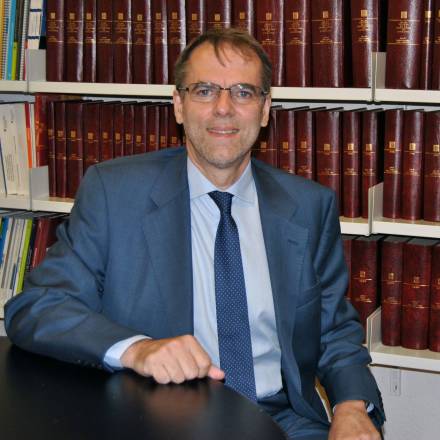
Oriol Amat (Barcelona, 1957) has long been one of the country's most recognised economists. Professor of Financial Economics and Accountancy at the Universitat Pompeu Fabra, commentator for VIA Empresa and active member of the Col·legi d'Economistes de Catalunya, he has deeply studied the economic viability of an independent Catalonia. Moreover, now he has made the leap to the political stage during this special moment our country is experiencing. Amat is 7th on the Barcelona de Junts pel Sí electoral list, and for weeks he has been travelling around Catalonia explaining why, in his opinion, independence is a basic tool for the country's economic survival.
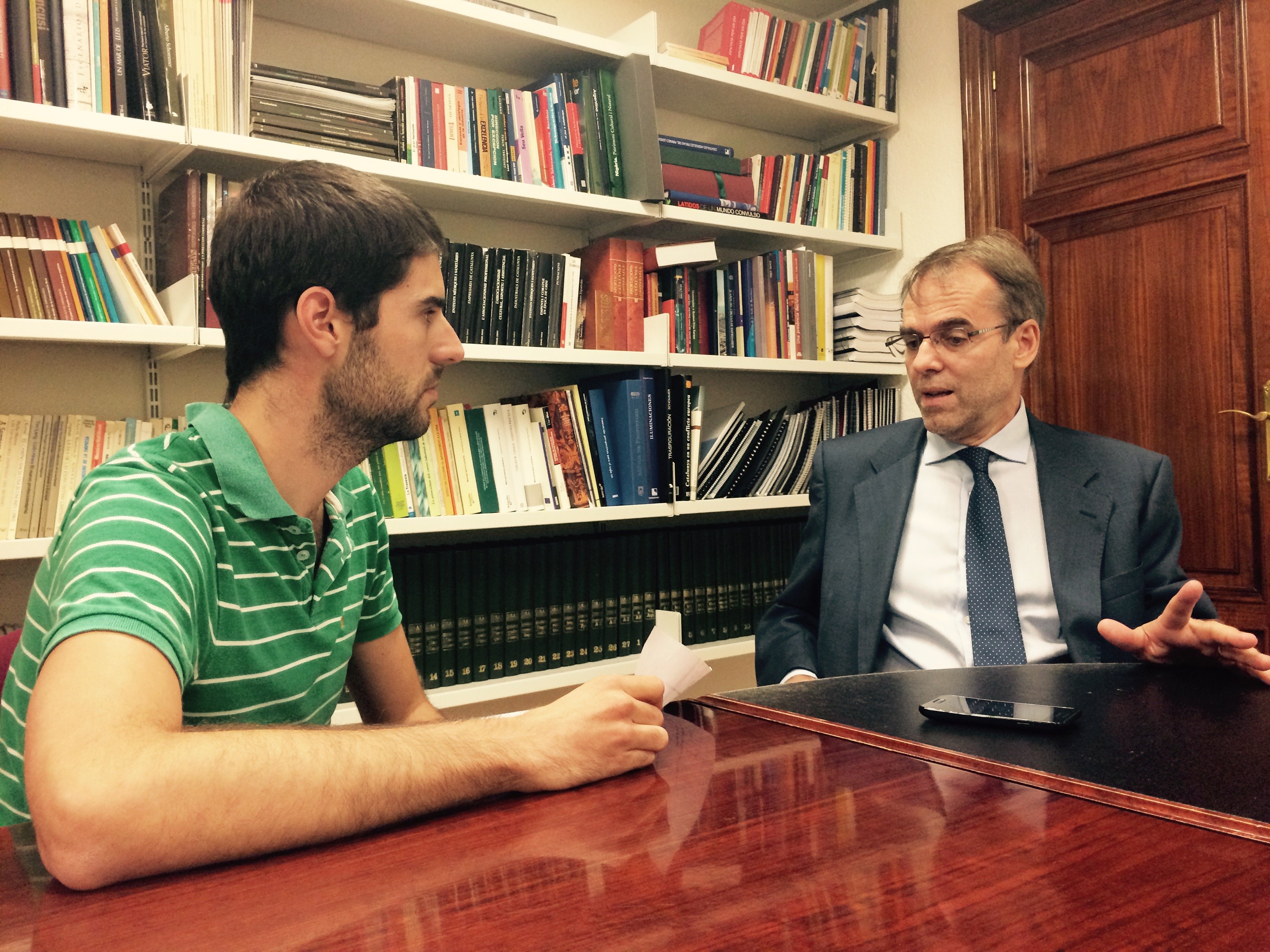
After taking part in the economic debate organised by the Pimec business association, Oriol Amat gave an interview to VIA Empresa. For the economics professor, the lack of resources and capacity to regulate according to the needs of people and companies leaves no possible alternative than the construction of a new state.
The first question is obligatory. How is it that someone with an established and prestigious academic position decides to "make life difficult" like this?
I never considered going into politics. However, in the field I am in, that of economics, and through my activities with the Col•legi d'Economistes and the Associació Catalana de Comptabilitat, for years we have been working to provide arguments and carry out studies on the viability of Catalonia. When a few weeks ago president Artur Mas and others proposed joining the list, initially I was not sure at all. Not because I did not share their objectives, but perhaps because I felt it was not the role for me.
What changed your mind?
What happened was that my father, who is 89, told me that it was the first time in his life he was going to ask something of me, which was that I join the list. Now my idea is to try to help in this project. I do not know what will happen in the future, but my idea is to continue in the academic world of universities, to be with my students and try to make a better country from my position in the university. However, depending on what happens on September 27, I do not know in which direction my life will go.
All of this has meant you haven't stopped moving around the country to attend a multitude of events. How has that experience gone?
What has been a nice surprise is the excitement of many people who come to offer their help. We have noticed that there are a lot of people who want a new country. Obviously there is a scaremongering campaign that will only get worse, but if we can manage to overcome it, we can have that new country, and one that is fairer and wealthier. In the end, working for the country and your people provides a lot of satisfaction.
What does Oriol Amat bring to the Junts Pel Sí electoral list? What were they looking for in you when they signed you up?
A grain of sand, the same as the other 80,000 candidates we have. Raül Romeva said "we are not going wherever the wind blows; we are the wind." We are a movement carrying out a peaceful and democratic revolution that is based on hope and the perception that we are part of a state that mistreats us and is against us. We have the chance to make a new country inside Europe that creates welfare and, above all, justice. What we want is to recover the resources that the State takes to make its pharaonic and ruinous works, while neglecting other things that we do need. We need investment in the railways or the Mediterranean corridor, because if not there are companies that will move elsewhere, and even others that will not come because those things do not exist.
Where will we see Oriol Amat come September 28? In the Catalan government in the event of victory?
At the moment I am only thinking about the country and its people. I not only think about the people who are excited about making this new country, but also those who will not vote out of fear. I think it is also worth doing it for those people, so that in a few years they can live a better life. All of this reminds me of when Finland wanted independence from Russia and they were told that it would become the world's poorest country. It was already very poor, but in a few years and with good governance, focusing on the key issues of education, research, and so on, it has now become one of the richest countries in the world. Thus, we are not only working for those people who have hope and see things clearly, but for everyone. In my case, the only horizon is the night of September 27, when I will see what the people of Catalonia say.
Moving to economics, beyond the often repeated argument of the fiscal deficit, why does Catalonia need to be independent?
On the one hand, all those taxes we pay and that disappear (more than 40% of the taxes we pay are taken away never to return), are a huge brake on the Catalan economy. However, above all, they put the brakes on people, as it is punishing to the welfare state. We think that the Generalitat has had to cut its budget by 20%, affecting such basic issues as education or health. I can't believe how we have managed to maintain the level we have. Everything can be improved, but such a high level has been maintained thanks to the professionals they have, who have suffered the consequences of the objectives imposed by the State. Catalonia already contributes a lot, but 95% of the tax revenue raised ends up in Madrid, and out of everything we send there, some 40% does not come back.
Is it all a question of money?
It is not only that, it is also the people who manage it. We want new public management. There are precedents in Catalonia, such as the Ajuntament de Barcelona or the Sant Cugat del Vallès city council, which in the past few decades and under different governments has carried out good public management. Public management has to look for efficiency and to regulate with people and the business sector in mind. Spain regulates thinking above all of a type of corporation that is very different than the business community in Catalonia. Much of the legislation that is made does not take small and medium-sized companies into consideration. In fact, a lot of the regulation is done by high-level state civil servants who do not know what a company is. Therefore, not only do we want more resources, we want to manage them and regulate for people and companies.
What does that mean in effect?
Creating state structures means, in short, between 50,000 and 70,000 jobs. Moreover, many of them would be highly qualified positions, thus reducing the unemployment rate significantly. If we subtract the four billion that would cost from the 16 billion euros of the fiscal deficit, there is still another 12 billion euros left. That money would serve to improve the welfare state. There are studies that show that when you invest a euro, for example in social services, it generates a return of one and a half euros. In other words, that 12 billion euros would act as a multiplier to create more jobs. In the Catalan Economic Commission of the Col·legi d'Economistes we have done studies that indicate that we could have an unemployment rate of 5 or 6% in very little time. What's more, we all agree that in two or three years Catalan GDP would rise by between 7 and 8% simply as a consequence of independence and having what a state generates.
Not everyone would trust that those predictions are real...
The 16 billion euros of fiscal deficit is not a pledge, but a reality. The tax ministry itself published "the Cuentas Territorializadas", as they call it, which cites a deficit for Catalonia of between 8 and 9 billion euros. And that is without counting all Spanish state structures and the contributions made to the rest of the regions in Spain! If we become independent that will not exist. What people need to look at is who is behind all of this, and then ask whether we are just dreamers.
There is often talk of the costs of independence. What are we certain about if we stay part of Spain?
We will not change Spain because you need a two thirds majority in parliament. Therefore, it cannot be changed without the Partido Popular (PP), which is the PP of mister Rajoy, who is proud of not having budged an inch on the issue. It is also the Spain of mister Aznar's FAES or of Felipe González, who says we are Nazis because we want to vote. Therefore, we are certain that it is a State that has been against Catalonia for years. The Spanish government has failed to comply with 11 sentences from the Tribunal Constitucional. It is a state that makes pharaonic infrastructure that does not interest us. They have cancelled AVE high-speed train lines into which they had invested billions of euros because there are only eight or nine daily passengers. We are in a crisis and some are having to cut back more than others, because they are forcing the autonomous communities to make many more cuts. And meanwhile we are building a thousand kilometres of AVE every year. Other countries stopped investing in high-speed rail when the crisis began, but here we have continued. And yet this State will not build the Mediterranean corridor even though the European Union says that it is a priority and is willing to fund part of it. Spain will never build it, and we could mention a great many other examples of infrastructure. That is what we are certain about.
If independence is not achieved, what will happen with the Catalan economy?
On September 27, even if we win the election, it will not be a definitive victory and we will need to continue working. Equally, if we lose, it will not be a definitive defeat and we will still need to continue working. This is a project that requires a lot of ongoing work. However, what we are sure about is that if there is a clear mandate on behalf of the electorate on September 27, the EU will help us. They have already told us in many ways that they will oversee the situation. The EU will put rationality first to avoid everyone here losing out. The EU will not gain anything from the independence of Catalonia, but with badly implemented independence, it will lose out. And with a conflict like the current one, the EU also loses out. Therefore, to avoid everyone losing, we are convinced that if there is a clear mandate, the EU will intervene and oversee the process. That is also what they have told us via our EMPs and the people in Diplocat. What they tell us is that the relationship with the EU has two stages. One is the current one, in which the EU is telling Mariano Rajoy to do something, although he does nothing. Depending on how 27S goes, we could move to a second stage, where there is a clear mandate in favour of independence, with the EU overseeing it.
Junts pel Sí includes Convergència, which has been in government since 2010. Is there any economic measures they could have introduced but haven't?
When a government has to cut 20% of the budget to comply with the deficit objectives that you have to meet to avoid them threatening you with not sending back more money and therefore collapse, then everything becomes more complicated. It is five billion euros, which is a small part of the fiscal deficit. It is money that we pay! The Spanish government always talks about the FLA, and says it costs nothing. But with interest it has cost us 1.9 billion euros so far. In other words, of the money we pay, they lend us back a percentage that we have to return with interest. That 1.9 billion euros it has cost us so far is more than that spent on social services in Catalonia. What's more, the range of Catalonia's public powers is minimal. In the past four years, Spain has implemented more than 200 recentralisation measures. If on the one hand we have the financial issue, on the other they take away powers and on top of that within a framework that makes action impossible... it is the way things are!
After taking part in the economic debate organised by the Pimec business association, Oriol Amat gave an interview to VIA Empresa. For the economics professor, the lack of resources and capacity to regulate according to the needs of people and companies leaves no possible alternative than the construction of a new state.
The first question is obligatory. How is it that someone with an established and prestigious academic position decides to "make life difficult" like this?
I never considered going into politics. However, in the field I am in, that of economics, and through my activities with the Col•legi d'Economistes and the Associació Catalana de Comptabilitat, for years we have been working to provide arguments and carry out studies on the viability of Catalonia. When a few weeks ago president Artur Mas and others proposed joining the list, initially I was not sure at all. Not because I did not share their objectives, but perhaps because I felt it was not the role for me.
What changed your mind?
What happened was that my father, who is 89, told me that it was the first time in his life he was going to ask something of me, which was that I join the list. Now my idea is to try to help in this project. I do not know what will happen in the future, but my idea is to continue in the academic world of universities, to be with my students and try to make a better country from my position in the university. However, depending on what happens on September 27, I do not know in which direction my life will go.
All of this has meant you haven't stopped moving around the country to attend a multitude of events. How has that experience gone?
What has been a nice surprise is the excitement of many people who come to offer their help. We have noticed that there are a lot of people who want a new country. Obviously there is a scaremongering campaign that will only get worse, but if we can manage to overcome it, we can have that new country, and one that is fairer and wealthier. In the end, working for the country and your people provides a lot of satisfaction.
What does Oriol Amat bring to the Junts Pel Sí electoral list? What were they looking for in you when they signed you up?
A grain of sand, the same as the other 80,000 candidates we have. Raül Romeva said "we are not going wherever the wind blows; we are the wind." We are a movement carrying out a peaceful and democratic revolution that is based on hope and the perception that we are part of a state that mistreats us and is against us. We have the chance to make a new country inside Europe that creates welfare and, above all, justice. What we want is to recover the resources that the State takes to make its pharaonic and ruinous works, while neglecting other things that we do need. We need investment in the railways or the Mediterranean corridor, because if not there are companies that will move elsewhere, and even others that will not come because those things do not exist.
Where will we see Oriol Amat come September 28? In the Catalan government in the event of victory?
At the moment I am only thinking about the country and its people. I not only think about the people who are excited about making this new country, but also those who will not vote out of fear. I think it is also worth doing it for those people, so that in a few years they can live a better life. All of this reminds me of when Finland wanted independence from Russia and they were told that it would become the world's poorest country. It was already very poor, but in a few years and with good governance, focusing on the key issues of education, research, and so on, it has now become one of the richest countries in the world. Thus, we are not only working for those people who have hope and see things clearly, but for everyone. In my case, the only horizon is the night of September 27, when I will see what the people of Catalonia say.
Moving to economics, beyond the often repeated argument of the fiscal deficit, why does Catalonia need to be independent?
On the one hand, all those taxes we pay and that disappear (more than 40% of the taxes we pay are taken away never to return), are a huge brake on the Catalan economy. However, above all, they put the brakes on people, as it is punishing to the welfare state. We think that the Generalitat has had to cut its budget by 20%, affecting such basic issues as education or health. I can't believe how we have managed to maintain the level we have. Everything can be improved, but such a high level has been maintained thanks to the professionals they have, who have suffered the consequences of the objectives imposed by the State. Catalonia already contributes a lot, but 95% of the tax revenue raised ends up in Madrid, and out of everything we send there, some 40% does not come back.
Is it all a question of money?
It is not only that, it is also the people who manage it. We want new public management. There are precedents in Catalonia, such as the Ajuntament de Barcelona or the Sant Cugat del Vallès city council, which in the past few decades and under different governments has carried out good public management. Public management has to look for efficiency and to regulate with people and the business sector in mind. Spain regulates thinking above all of a type of corporation that is very different than the business community in Catalonia. Much of the legislation that is made does not take small and medium-sized companies into consideration. In fact, a lot of the regulation is done by high-level state civil servants who do not know what a company is. Therefore, not only do we want more resources, we want to manage them and regulate for people and companies.
What does that mean in effect?
Creating state structures means, in short, between 50,000 and 70,000 jobs. Moreover, many of them would be highly qualified positions, thus reducing the unemployment rate significantly. If we subtract the four billion that would cost from the 16 billion euros of the fiscal deficit, there is still another 12 billion euros left. That money would serve to improve the welfare state. There are studies that show that when you invest a euro, for example in social services, it generates a return of one and a half euros. In other words, that 12 billion euros would act as a multiplier to create more jobs. In the Catalan Economic Commission of the Col·legi d'Economistes we have done studies that indicate that we could have an unemployment rate of 5 or 6% in very little time. What's more, we all agree that in two or three years Catalan GDP would rise by between 7 and 8% simply as a consequence of independence and having what a state generates.
Not everyone would trust that those predictions are real...
The 16 billion euros of fiscal deficit is not a pledge, but a reality. The tax ministry itself published "the Cuentas Territorializadas", as they call it, which cites a deficit for Catalonia of between 8 and 9 billion euros. And that is without counting all Spanish state structures and the contributions made to the rest of the regions in Spain! If we become independent that will not exist. What people need to look at is who is behind all of this, and then ask whether we are just dreamers.
There is often talk of the costs of independence. What are we certain about if we stay part of Spain?
We will not change Spain because you need a two thirds majority in parliament. Therefore, it cannot be changed without the Partido Popular (PP), which is the PP of mister Rajoy, who is proud of not having budged an inch on the issue. It is also the Spain of mister Aznar's FAES or of Felipe González, who says we are Nazis because we want to vote. Therefore, we are certain that it is a State that has been against Catalonia for years. The Spanish government has failed to comply with 11 sentences from the Tribunal Constitucional. It is a state that makes pharaonic infrastructure that does not interest us. They have cancelled AVE high-speed train lines into which they had invested billions of euros because there are only eight or nine daily passengers. We are in a crisis and some are having to cut back more than others, because they are forcing the autonomous communities to make many more cuts. And meanwhile we are building a thousand kilometres of AVE every year. Other countries stopped investing in high-speed rail when the crisis began, but here we have continued. And yet this State will not build the Mediterranean corridor even though the European Union says that it is a priority and is willing to fund part of it. Spain will never build it, and we could mention a great many other examples of infrastructure. That is what we are certain about.
If independence is not achieved, what will happen with the Catalan economy?
On September 27, even if we win the election, it will not be a definitive victory and we will need to continue working. Equally, if we lose, it will not be a definitive defeat and we will still need to continue working. This is a project that requires a lot of ongoing work. However, what we are sure about is that if there is a clear mandate on behalf of the electorate on September 27, the EU will help us. They have already told us in many ways that they will oversee the situation. The EU will put rationality first to avoid everyone here losing out. The EU will not gain anything from the independence of Catalonia, but with badly implemented independence, it will lose out. And with a conflict like the current one, the EU also loses out. Therefore, to avoid everyone losing, we are convinced that if there is a clear mandate, the EU will intervene and oversee the process. That is also what they have told us via our EMPs and the people in Diplocat. What they tell us is that the relationship with the EU has two stages. One is the current one, in which the EU is telling Mariano Rajoy to do something, although he does nothing. Depending on how 27S goes, we could move to a second stage, where there is a clear mandate in favour of independence, with the EU overseeing it.
Junts pel Sí includes Convergència, which has been in government since 2010. Is there any economic measures they could have introduced but haven't?
When a government has to cut 20% of the budget to comply with the deficit objectives that you have to meet to avoid them threatening you with not sending back more money and therefore collapse, then everything becomes more complicated. It is five billion euros, which is a small part of the fiscal deficit. It is money that we pay! The Spanish government always talks about the FLA, and says it costs nothing. But with interest it has cost us 1.9 billion euros so far. In other words, of the money we pay, they lend us back a percentage that we have to return with interest. That 1.9 billion euros it has cost us so far is more than that spent on social services in Catalonia. What's more, the range of Catalonia's public powers is minimal. In the past four years, Spain has implemented more than 200 recentralisation measures. If on the one hand we have the financial issue, on the other they take away powers and on top of that within a framework that makes action impossible... it is the way things are!